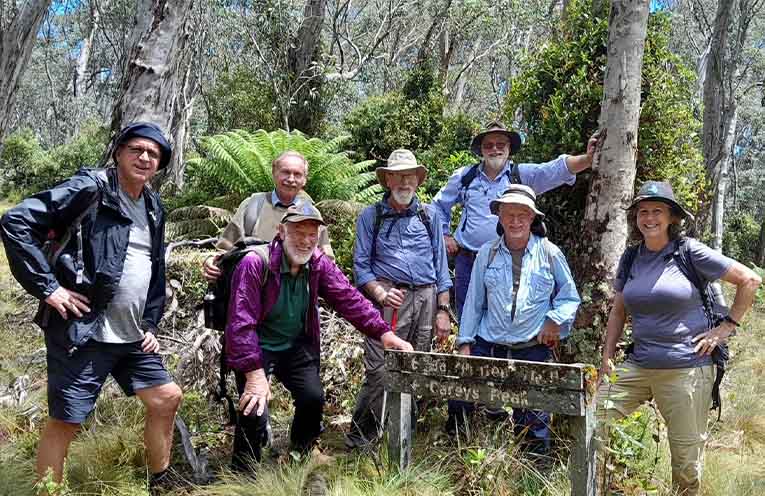
TWO YEARS ago, in January 2024, 15 bushwalkers from Gloucester Environment Group (GEG) hiked up to Careys Peak from Junction Pools in Barrington Tops National Park.
The cooler climate of The Tops was a welcome escape from Gloucester’s sweltering 41°C heat that day.

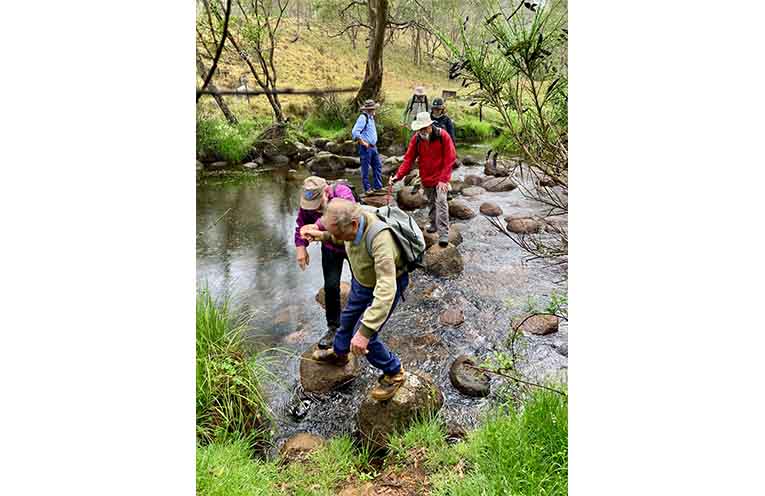
Fast forward to Sunday 18 January 2026, and despite forecasts for heavy rain and chilly temperatures, eight walkers pushed ahead and were rewarded with mild and occasionally wet weather – perfect for a 13 kilometre trek.
Travel time from Gloucester to Junction Pools is roughly two hours.
Junction Pools is close to the origin of the Barrington River.
Before starting out, each participant made sure to use the boot wash station to help prevent the spread of Phytophthora, a destructive mould responsible for plant dieback.
The Aeroplane Hill track presented the initial challenge en route to Careys Peak.
This hill, 1,531m above sea level (ASL) is known for an RAAF Mosquito fighter bomber crash on April 16, 1945, which tragically claimed two lives.
A topic that frequently comes up about Barrington Tops is Scotch Broom, an invasive plant species.
It has so overtaken the high country that even wallabies struggle to move through its dense undergrowth.
Fortunately, Nationals Parks staff and volunteer groups are working hard to clear Scotch Broom from popular tracks and areas.
Two years ago, we encountered three black and brown snakes along the trail.
This time, the sightings included two pairs of copperheads.
It’s always interesting to note how some hikers are drawn to snakes, while others keep their distance.
Thankfully, the Snake Bite Kit stayed unused.
After climbing Aeroplane Hill and tackling another, shorter ascent, the path flattened with snow grass beneath our steps and snow gums, mountain gums, and pepperbush lining the sides.
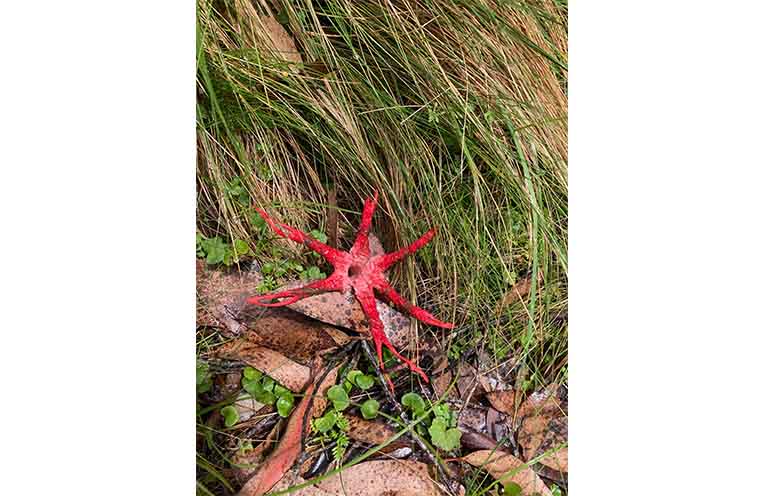
Along the way, we spotted the distinctive Stinkhorn fungus – attractive but notable for its strong smell.
An hour into the hike, we arrived at the beautiful Black Swamp, a natural wetland dominated by sedges, filled with water and featuring a pleasant campground.
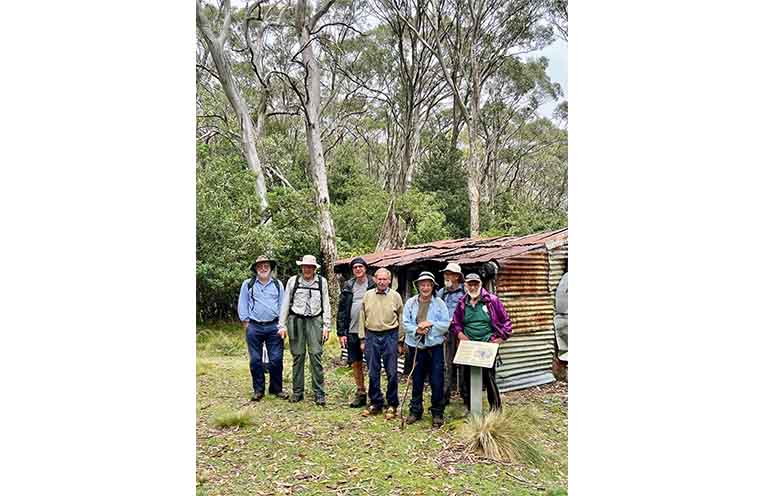
Continuing, we passed an old emergency hut still standing.
Throughout The Tops, you’ll find a few rustic timber and corrugated iron huts built between the 1930s and 1960s by bushwalking clubs to serve as refuge during winter snowstorms.
Lunch was enjoyed at Careys Peak (1,544m ASL).
Unlike the breathtaking views of 2024, this year offered only a whiteout.
During our meal, we learned about the history of Trig Stations in NSW.
The Trig at Careys Peak is one of many preserved for historical reasons, although GPS now surpasses their original function.
Rain began soon after our return journey to Junction Pools; not torrential, but persistent enough to drench anyone who didn’t come prepared.
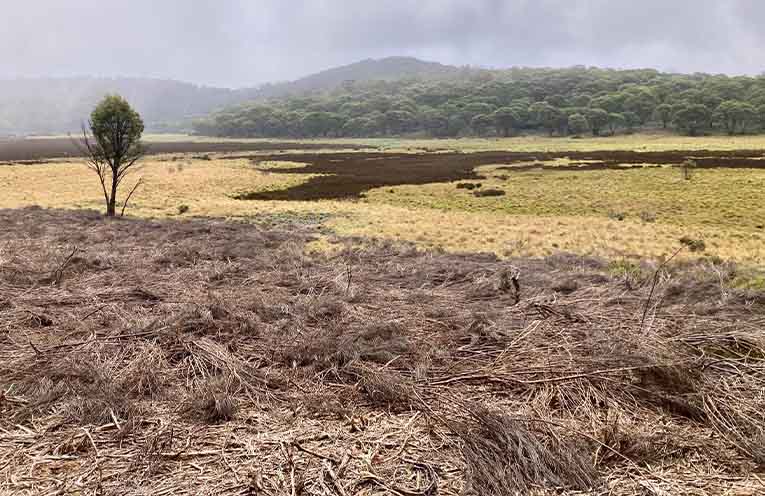
A highlight on the way back was appreciating the vast expanse of Edwards Swamp.
These high-altitude wetlands feed several rivers spreading out from Barrington Tops.
Once back at our cars at Junction Pools, walkers enjoyed snacks and hot drinks – though, swimming
wasn’t on the agenda.
GEG encourages everyone to experience our National Parks and the reserves set aside for public
enjoyment.
New members are welcome.
Contact gloucester.environment.group@gmail.com.
By Tibor KOVATS