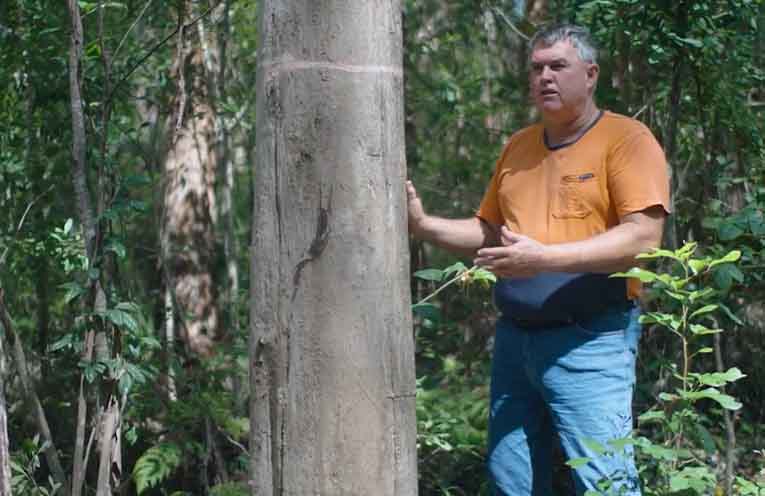
A FIFTH-GENERATION family timber operation in Bulahdelah says it is absorbing an almost $8000 weekly fuel surge to keep hardwood moving to Australia’s cities.
Anthony Dorney and his brothers operate two hardwood sawmills, SA Relf and Newells Creek, continuing a timber cutting tradition which has lasted for more than a century. Last week, Anthony pulled up to the bowser and paid $2.90 a litre.
“It’s obscene,” he said.
In a single week, the Dorneys say daily fuel costs across the two operations have climbed by more than $7,800.
Every tonne of Tallowwood, Ironbark and Blackbutt that leaves Bulahdelah does so on the back of a fuel-powered truck.
The two mills employ more than ten percent of the local town’s population and supply a large share of north-east NSW’s hardwood – running supply chains south to Sydney and the Central Coast, west to Canberra, and north to Brisbane.
“It’s not a case of panic buying,” Dorney said.
“It’s all due to a critical shortage at the bowser and growing rationing between customers.”
Nationals MP Alison Penfold, the Member for Lyne, raised the issue directly to Climate Change and Energy Minister Chris Bowen in Federal Parliament last week.
“Yesterday the minister insisted that there is no fuel supply shortage,” Ms Penfold said.
“The Dorney family in Bulahdelah run two timber mills, multiple hauling and felling crews, and a fleet of logging and freight trucks.
“In one week alone, their daily fuel costs have increased by $7,800.
“Minister, under your watch, why are Australians like the Dorney family, and their business, running out of fuel?”
Mr Bowen acknowledged regional supply chains are under severe pressure and confirmed the Australian Competition and Consumer Commission has been directed to impose hard penalties against profiteering.
“We’ve been very clear that no-one in the fuel supply chain should seek business or economic benefit out of that,” he said.
Timber industry body Forest and Wood Communities Australia (FWCA) is warning that soaring regional fuel prices are threatening the nation’s hardwood supply chain.
“With 90 percent of our population living on just 0.25 percent of Australia’s land mass, regional communities are feeling the impact of surging fuel prices more acutely than their city cousins,” said FWCA chairman Steve Dobbyns.
“The cost of fuel is up to a dollar higher in regional communities and they can’t just walk to the shops or catch a train.”