A NEWLY released report has highlighted how climate change is placing a significant strain on MidCoast Council finances, and on its residents.
The report released last week from the Climate Council, titled “Breakneck Speed: Summer of Climate Whiplash” examines what this just-gone summer of extreme weather says about the risks ahead.

“Our analysis shows Australia’s 2025/26 summer swung between extremes – from heat and fires, to intense rainfall and floods, and back to extreme heat and fire danger – sometimes within just days,” said Dr Martin Rice, Climate Council Research Director when releasing the report.
“This rapid flip between conditions, known as ‘climate whiplash’, is making disasters harder to prepare for and recover from, and Australians are paying a high price for failure to rein in climate pollution as disasters become more frequent, damaging and expensive.”
The report noted that over the summer Victorian communities were flung from catastrophic fire warnings to flash flooding within a week, then back to extreme heat only 10 days later.
While in Western Australia after 45°C heat the Eyre Highway was closed due to fires ignited by dry lightning, only to be cut off again two days later by floodwaters.
“The Otways in Victoria epitomised the 2025/26 summer of breakneck climate whiplash,” explains the report.
“Some residents of Wye River on Victoria’s Great Ocean Road evacuated under catastrophic fire danger warnings, and a week later the same community watched floodwaters carry cars out to sea after record-breaking rainfall.”
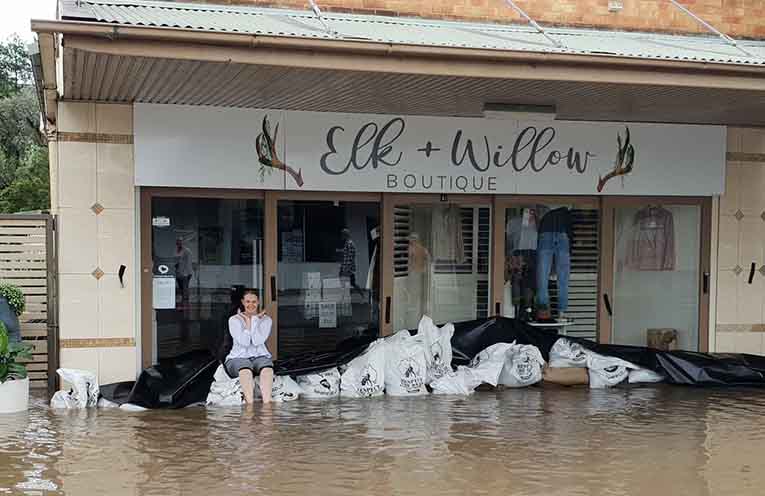
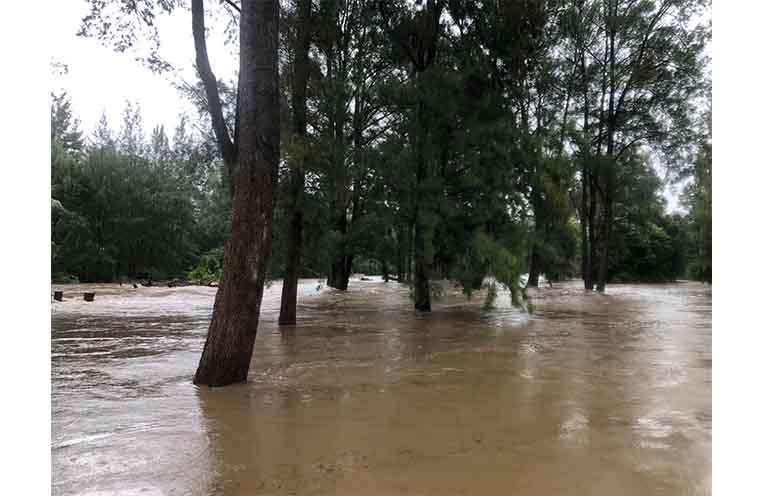
The report indicates that annual disaster costs per Australian have risen 222 percent since the 1980s and the MidCoast local government area has been particularly hard hit.
MidCoast Council has applied for state and federal disaster recovery funding 16 times since 2019, with $232 million in flood damage in 2025 alone.
Some of the disturbing facts detailed in the report are:
– 2025 was Australia’s fourth hottest year on record and January 2026 the fourth hottest January
– Six consecutive days in January saw at least one Australian location reach 49°C or higher, while Port Augusta, SA, became the most southerly place on Earth to record 50°C
– 2025 and 2024 were the two warmest years on record for Australian ocean temperatures and hotter oceans fuel tropical cyclones and heavy rainfall
– Insurance premiums are up 51 percent in five years, impacting all households even if they aren’t directly affected by fire, floods or storms.
The report concludes that without far deeper and faster cuts to climate pollution, the extreme heat, flash flooding and catastrophic fire danger experienced this summer will continue to worsen in the years ahead.
The full report can be accessed at www.climatecouncil.org/resources.
By John WATTS