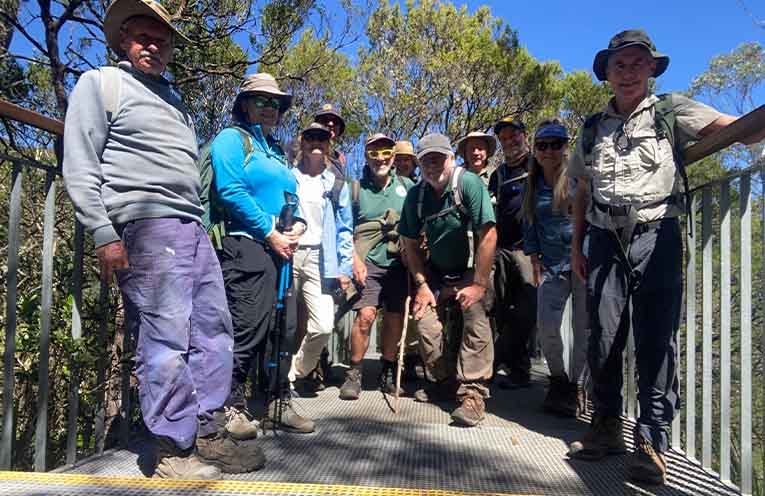
ELEVEN members of the Gloucester Environment Group enjoyed a wonderful Autumn day walking around the Gloucester Tops on Sunday, 15 March.
Led by John Watts, walkers combined several of the short tracks offered at the Tops, each one highlighting a different aspect of this unique area.

“We started on the Antarctic Beech Forest Track, which wended its way through stands of magnificent Antarctic Beech which tower above tree ferns and a damp carpet of moss on the forest floor,” said walk coordinator Rod Eckels.
“These trees are remnant rainforest trees that are now found in continents and islands that were once part of the southern supercontinent of Gondwana.
“The few places on earth where the trees exist include high-altitude, fire-free eastern highlands of Australia, as well as New Zealand, New Guinea, Chile and Argentina.
“We are lucky to be able to see them so close to Gloucester.”
The trail included a mossy gully that crossed one of the highland tributaries of the Gloucester River near an impressive cascade.
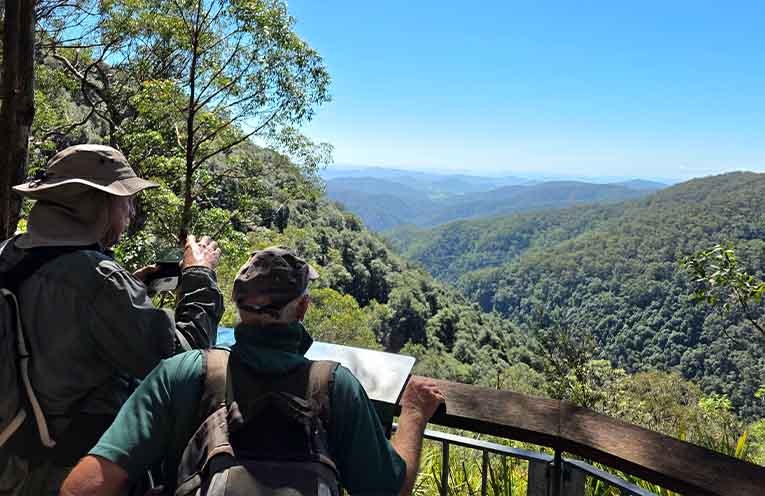
The walkers continued along the ridge line to the Andrew Laurie lookout – which has magnificent views to the north-east towards Copeland Tops and the Bucketts.
After a short break at the Andrew Laurie lookout, they continued down a short, sharper section of the trail that led to the viewing platform above the Gloucester Falls Cascades.
“The view from the platform enables one to appreciate the huge volumes of water that are feeding down from the upper catchment into these cascades and the Gloucester River,” Rod said.
“The trail then followed the Gloucester River upstream above the cascades, through more open eucalypt forest, allowing walkers to observe how the river is developing its course, around boulders, over rock ledges and through steps and pools.
“This section of the walk ended with a lunch break at the picnic table located near the river crossing that marks the start of the Mt Neilson Trail.
“The final section of the walk back to the cars was along the gently undulating River Track.
“This well-defined track led us further upstream on the Gloucester River into yet another interesting ecological community of sub-alpine swamps and peatlands.
“These montane swamps, often found at over 1,300 metres, act like sponges, soaking up high rainfall and
snowmelt to feed the river system.
“After a very enjoyable 4.5 hours easy walk, we arrived back at the cars and headed back to Gloucester.”