IT’S always distressing to hear or read about people losing their lives in a house fire, particularly when many such tragedies can be prevented with simple safety measures.
Each year, approximately 20 people die in NSW from fires that could have been prevented, and almost all of these fatalities occur in people’s homes.

Fire safety inspections play a crucial role in protecting families by identifying potential hazards before they become life-threatening emergencies.
As previously reported in NOTA (15 April 2026), in an effort to reduce the number of fire fatalities across the state, Fire and Rescue NSW is encouraging residents across NSW to book in a fire safety visit to help protect themselves and their loved ones.
The program specifically targets households that may statistically, be at higher risk of fires occurring, including:
– over 65s,
– people who live alone,
– those with limited mobility, hearing or vision impairments,
– residents who are supported by carers, family or friends, and
– anyone with English as a second language.
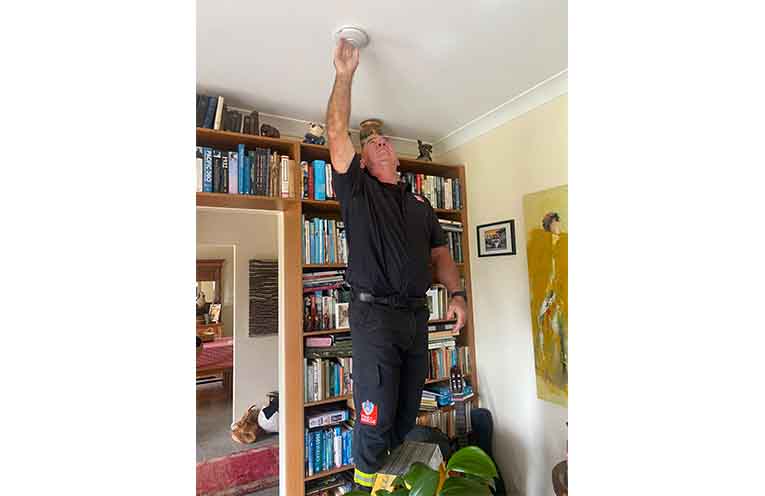
Gloucester Station Officer Beau Douglas told NOTA that his station is currently completing approximately a dozen safety visits per week, and hopes this number increases, particularly moving into the cooler months.
“It is concerning that we are finding homes with smoke alarms that are 20, even 30 years old, or worse, and homes with no smoke alarms at all,” said Mr Douglas.
“It is important that all households have a working smoke alarm as it provides early warning of a fire to allow the best chance to escape the home safely, particularly of a night while sleeping, when our ability to smell smoke is reduced.
“We are happy to work with residents and provide replacement batteries or install smoke alarms for residents that do not have one installed.
“We also provide fire safety advice during the visit, particularly around the use of fireplaces and the charging of lithium-ion batteries.”
NOTA had the opportunity to observe a house fire safety inspection and was impressed by its thoroughness and attention to detail, such as the positioning of fire blankets, fire extinguishers and exit door keys.
Mr Douglas indicated that because Gloucester has a large number of aged residents, lithium-ion batteries pose a significant fire risk, particularly when they are not charged correctly, and those charging scooters and other devices should only use the charger that came with the device.
“Just because the plug fits, doesn’t mean it’s compatible,” added Mr Douglas.
“As the weather cools and we begin to use fireplaces and other heating devices – I would also encourage residents to keep everything at least a metre from the heater.”
Anyone who wishes to book a Safety Visit can do so by visiting fire.nsw.gov.au/visits.
By John WATTS