ACCORDING to the Australian Competition and Consumer Commission quad bikes are one of the leading causes of injury and death on Australian farms, with over 200 recorded fatalities from quad bikes in Australia since 2011.
As a farming area there are likely to be many Gloucester High School students who will look to a career involving the use of quad bikes.
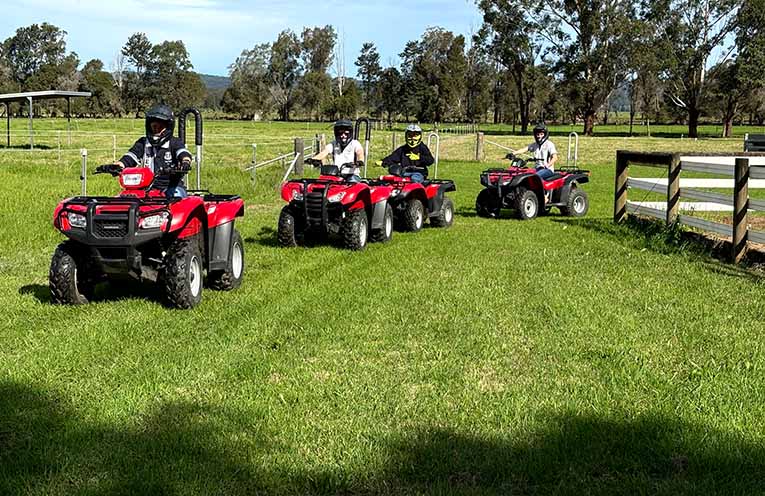
In recognition of this, the school recently arranged for a number of agricultural and primary industries students to attend Taree TAFE to complete nationally recognised quad bike and side-by-side training.
A side-by-side is a motorised off-road vehicle where the driver and passengers sit beside each other in bucket or bench seating and, unlike quad bikes that use handlebars and require the rider to straddle the seat, side-by-sides use a steering wheel, foot pedals, and a roll cage.
The TAFE course combined classroom theory with hands-on practical sessions to ensure students gained both the knowledge and real-world skills required for safe, competent operation.
During theory lessons, students were told about legal requirements, risk assessment, machine maintenance and load management.
Practical sessions at TAFE’s training facility gave students supervised experience riding and manoeuvring quad bikes and side-by-sides across varied terrain, focusing on balance, braking, cornering and emergency responses.
The qualification gained from the course is nationally recognised, meaning successful students receive formal certification that supports workplace safety compliance and can be used towards future employment or further vocational training.
“This training strengthens Gloucester High’s Primary Industries program by combining classroom learning with industry standard practical experience, helping students build confidence and pathways into apprenticeships, farm work or further study,” said Chris Murray, head teacher, Technical and Applied Studies.
“Gloucester High looks forward to more industry partnerships that prepare students
for careers in agriculture and related fields.”
By John WATTS